
Unlike Mahan, Lurie says simply increasing shelter beds misses the mark when solving homelessness
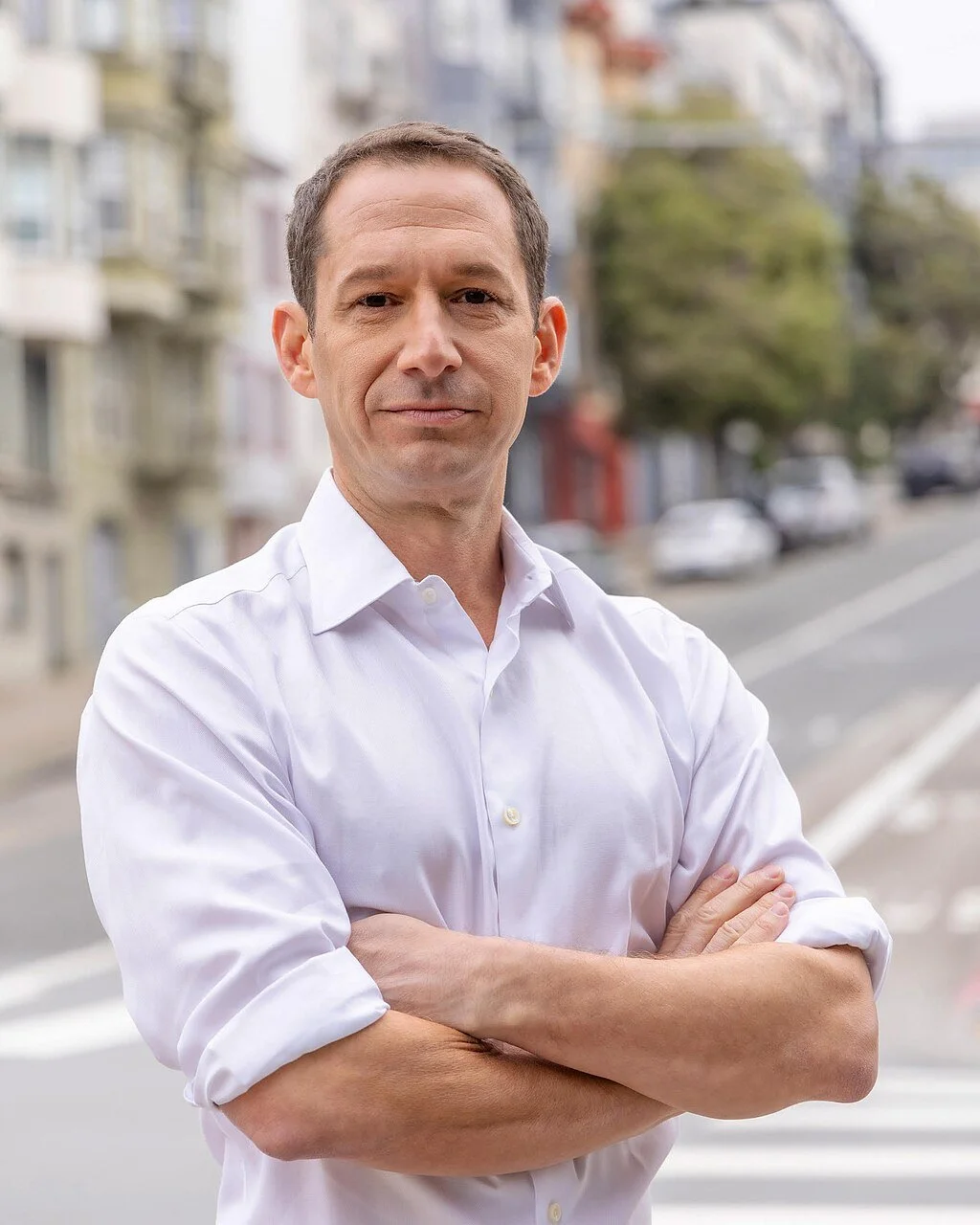

Even though homelessness continues to rise in SJ, Mayor Mahan and city officials point to an increase in the number of shelter beds as a sign of success. But is it? SF's Mayor Lurie says it's time to go beyond simply counting beds. Rather, he says, cities should be using a data-driven approach to match shelter types to individual needs—shifting from capacity to compatibility. Invisible People explains.
San Francisco has devised a new approach for its shelter system that has aligned both the Mayor’s Office and local advocates.
Throughout his campaign, San Francisco Mayor Daniel Lurie promised to increase the city’s shelter capacity by 1,500 beds. Six months later, local reports say Lurie’s administration has realized that approach was the wrong one. Instead, they’ve created a targeted approach to increase shelter capacity in a way that meets the needs of people who are homeless and neighborhoods.
Kunal Modi, the mayor’s top policy chief on homelessness, penned an op-ed in The San Francisco Standard outlining this change.
“As the mayor’s point person for the homelessness and behavioral health crises, I have been entrusted with making a range of systemic changes,” Modi wrote. “Now, after half a year on the job, I see that the best way to deliver on that mandate is by making our system more effective, not building toward a specific number of beds.”
The new approach uses city data to identify the neighborhoods with a disproportionate number of people who are homeless compared to available services and shelter beds. Neighborhoods that have an excess of services compared to unhoused clients would not be required to add more, The San Francisco Standard reported.
Modi added that the city will also help identify the best kind of shelter for each neighborhood. He noted that San Francisco has primarily built congregate shelters over the last five years, which meet the needs of a limited number of people who are homeless in the city.
“We can’t keep placing people into housing that doesn’t match their clinical needs and expect to get better results,” Modi wrote.
The new approach comes at a time when homelessness is growing in San Francisco. According to the city data, there were more than 8,200 people experiencing homelessness in 2024, a 7% increase from the previous year. Moreover, the count shows three people became homeless for every one person who exits from the homeless response system to housing.
“The work of creating a new system to address homelessness was never going to be easy,” Modi wrote. “But we’ll never break the cycles of homelessness, addiction, and government failure if we let pride or politics block real solutions.”
Advocates applauded the new approach, saying it suggested that the Mayor had come to terms with their warnings that short-term housing is not the best way to address homelessness in the city. The goal of the new approach is to create more “flow” in the homelessness response system and close the gap between individuals who are newly homeless and those who exit to housing.
“What you really want to do is make sure that folks have housing so that they can move out of shelter and then that bed can be available for someone else,” Jennifer Friedenbach, who leads the San Francisco Coalition on Homelessness, told KQED. “You want to invest in prevention. That really has been our recommendation all along.”
Other advocates suggested the new approach could help the Lurie administration politically.
“He’s getting constituent pressure,” Homeless Oversight Commission co-chair Christin Evans told KQED. “The visible homelessness signs have clearly been a priority of his.”
San Francisco’s new approach has several advantages that could provide a roadmap for other cities. For starters, it elevates the audience over the product by helping cities create the right kind of shelter rather than simply expanding bed capacity. This approach centers on the needs of local people who are homeless while also addressing the needs of local communities.
It also represents a radical shift away from the way many cities approach shelter investments. Cities often focus on the product side of the equation by regulating the kinds of shelters available, where they can be located, and how they’re built. This approach requires the city to pass broad ordinances that can become politically unpalatable.
For instance, Supervisor Bilal Mahmood’s One City Shelter Act would have required all districts in San Francisco to approve plans for at least one homeless shelter by mid-2026. Opponents said the bill did not address the real issue San Francisco faces, that its shelter portfolio is not built to meet the needs of the people who use it.
Mahmood’s bill was significantly scaled back after Lurie exerted some pressure on the supervisor, according to The Standard.
Several other cities also suffer from a mismatch between their available shelter beds and the needs of people who stay there. That is one reason why the national Housing Inventory Count shows a 7% increase to more than 1.1 million in 2024, yet homelessness increased by 18% up to more than 771,000.
Mahmood also suggested that the approach could help “fairly” distribute shelter resources across the city. Doing so can help local officials and advocates overcome local opposition.
“We move from a district to a neighborhood basis to acknowledge the dynamics of how we need to address homelessness,” he told The Standard.
Read the whole thing here.
Follow Opportunity Now on Twitter @svopportunity
We prize letters from our thoughtful readers. Typed on a Smith Corona. Written in longhand on fine stationery. Scribbled on a napkin. Hey, even composed on email. Feel free to send your comments to us at opportunitynowsv@gmail.com or (snail mail) 1590 Calaveras Ave., SJ, CA 95126. Remember to be thoughtful and polite. We will post letters on an irregular basis on the main Opp Now site.