
Expert: Some US cities succeed addressing homelessness—but not SJ
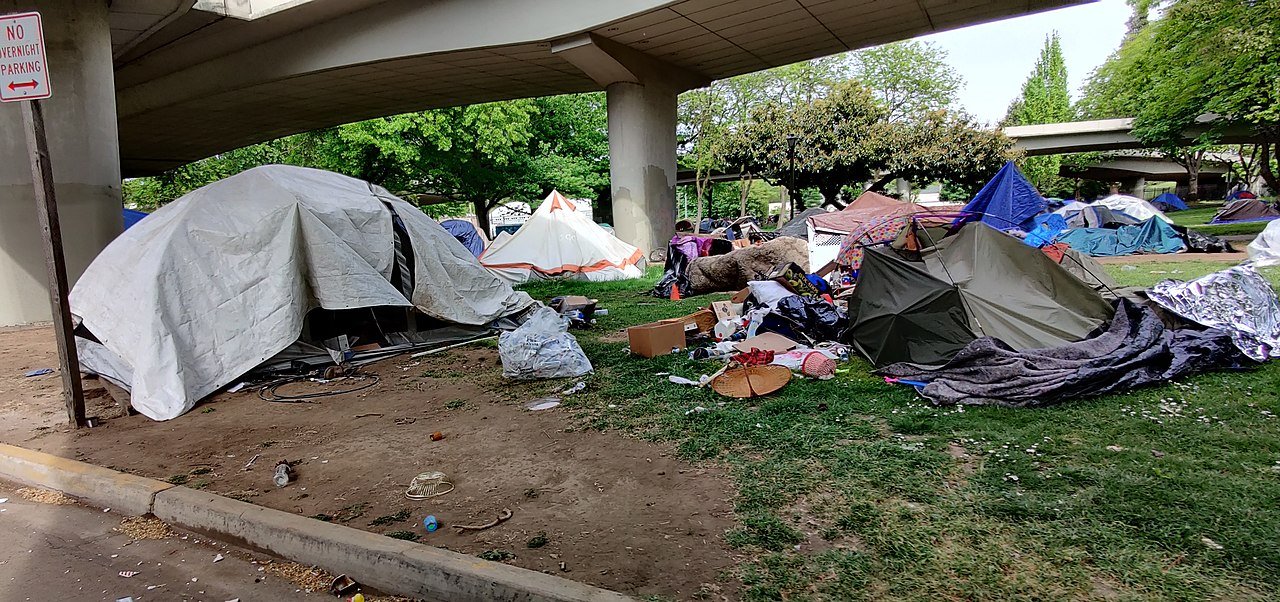

Global housing expert Scott Beyer explores in Eurasia Review why CA cities can’t seem to get it right, while places like Houston, Greenville, SC, and Bergen County, NJ do.
For years, America’s homelessness debate has been dominated by cautionary tales. The sprawling tent encampments of Los Angeles and San Francisco have become shorthand for urban decline. Those and other cities, particularly on the West Coast, spent billions to combat the problem yet have still seen dramatic growth in homelessness.
As troubling as the sheer numbers are, the problem is compounded by a lack of behavioral standards in these cities. Thousands of people are allowed to camp, openly use drugs, and panhandle aggressively. The result is not mere poverty but disorder—creating permanent skid rows in certain sections.
But while these cities dominate headlines, others across the country are getting this issue right—showing that homelessness can be reduced, sometimes dramatically.
To understand who is succeeding, it’s important to define what “success” actually means.
The first definition is straightforward: cities that restore public order. These places rely on clear anti-camping ordinances, consistent policing, and sometimes even privatization of public space to allow for stricter rules. The goal is to avoid normalizing street living.
The second definition goes beyond quality-of-life maintenance. Some cities don’t merely push homelessness out of sight; they build systems that transition people into stable housing and help them regain independence. Their focus is on permanent exits from homelessness.
A third, emerging category focuses on prevention, using market-driven housing supply and other policies to push homelessness down to “functional zero.”
The Enforcement Model: Cleaning Up the Streets
To understand enforcement, it’s helpful to think about incentives. Why does a homeless person encamp in one city versus another? It’s not just about weather or shelter beds, but whether the behavior tied to homelessness is tolerated.
Some cities allow vast encampments where anything goes. Others simply don’t.
This enforcement happens at the most granular level in America’s thousands of HOA communities, almost none of which have any homeless people laying around (even when located in central urban neighborhoods). While HOAs are not comparable to entire municipalities, they are nonetheless an absolutist example of how gates and private security prevent vagrancy.
Some cities however mirror this thinking through anti-camping ordinances, anti-panhandling laws, and sweeps of tent cities. Some go further by privatizing public spaces—turning parks or plazas over to conservancies or business improvement districts that can impose stricter rules than municipal governments. Central Park, for example, does not have the visible homelessness of other New York City public spaces, because it is privately-managed by a conservancy that deploys ambassadors parkwide.
Greenville, South Carolina is, of probably all the U.S. cities I’ve visited, the best at providing beautiful spaces that don’t succumb to vagrancy and loitering. There’s a reason for that: the city has tough anti-camping laws that prevent sleeping in vehicles on public property, or lying down in public for more than 2 hours.
Such measures are taking hold in bigger cities like Miami, Jacksonville, Phoenix—even San Francisco. Cities inclined toward this approach received legal backing from the Supreme Court’s 2024 decision in City of Grants Pass v. Johnson, which clarified that municipalities do not violate the 8th Amendment against cruel and unusual punishment when enforcing anti-camping ordinances, even if shelter space in such cities is limited.
These enforcement tools improve quality of life for residents and businesses, but don’t solve homelessness. Without real housing alternatives, crackdowns become a game of whack-a-mole—moving people from one city to another.
Transformational models
In the 2025 Independent Institute report Beyond Homeless, I wrote an analysis of transitional models that have surfaced in American cities and that are built on accountability. High-barrier shelters such as Step Denver, Solutions for Change in California, and Salvation Army programs nationwide take a different approach from the low-barrier shelter model. They require of the homeless sobriety, and participation in programs that help them “graduate” to self-sufficiency. Their structured pathways include job training, addiction recovery, counseling, and parental help. They have strong track records of helping people rebuild their lives, but have struggled to scale because federal funding now prioritizes permanent supportive housing over transitional, high-accountability models.
Permanent supportive housing places individuals directly into subsidized apartments with on-site services. I’m less persuaded by this approach when it is implemented without clear behavioral standards. In cities like Los Angeles and San Francisco, large concentrations of such housing attract disorder; even if people are technically “off the street,” the behaviors associated with chronic homelessness simply shift indoors, while still harming neighborhoods. Moreover, the promise of subsidized housing can become a magnet, drawing more homeless individuals into cities perceived as generous.
That said, some cities claim success with this coordinated “Housing First” strategy. The most frequently cited example is Houston. Over the past decade, it reduced overall homelessness by 63% and now has the lowest homeless rate of major U.S. metros. Homelessness is also declining in Dallas and Austin—notable given that these are warm-weather metros with strong job markets, two factors that typically attract transients.
Rather than building a sprawling bureaucracy, Houston aligned federal funds, nonprofits, and local agencies around a single coordinated entry system. It moved individuals rapidly into permanent housing and wrapped services around them. Its continuum of care program, called The Way Home, was credited with ending veteran homelessness in the city.
The Third Way: Data, Prevention, and Housing Supply
Beyond enforcement and housing programs lies a third strategy: prevention-driven, data-centered systems aimed at reaching “functional zero.” Communities participating in initiatives like Built for Zero maintain by-name lists of homeless individuals and track inflow and outflow in real time.
Places such as Bergen County, New Jersey have demonstrated that when homelessness is tracked like a public health metric—rather than estimated once per year—resources can be deployed strategically. Rental assistance, landlord mediation, and short-term financial help can stop people from becoming homeless in the first place. The county was able to reach this functional zero goal in 2016, but has struggled to maintain it with the economic pressures caused by Covid.
But the most powerful preventative measure, without doubt, is abundant housing. Houston’s low homeless count may be in part due to the services mentioned above, but mainly it’s the permissive regulatory environment for new construction. Houston generally competes with Dallas as America’s #1 issuer of housing permits, and as a result has median home prices 20-25% below the U.S. median.
A Zillow search shows over 700 units, some of them surprisingly high quality, available around the city for under $1,000/month. A similar search produces only 78 results in all of San Francisco and San Jose. This means that Houston can, through purely market forces, house demographics that would end up homeless in California.
Homelessness, like any public policy issue, follows incentives.
Cities that fund homeless services, tolerate that lifestyle, and make it hard to build low-income starter housing get exactly what they should expect: lots of homelessness. The political culture in these cities is such that, upon seeing all the dysfunction, the voting base concludes that “something should be done” and often supports yet more funding, as to feed the cycle.
Cities that make construction easier, provide supportive housing, and then demand that the homeless seek help rather than living permanently on the street, may not completely solve the problem. But they have a better grasp on it, and less visible homelessness, than the dire cases found on the West Coast.Read the whole thing here.
Follow Opportunity Now on Twitter @svopportunity
We prize letters from our thoughtful readers. Typed on a Smith Corona. Written in longhand on fine stationery. Scribbled on a napkin. Hey, even composed on email. Feel free to send your comments to us at opportunitynowsv@gmail.com or (snail mail) 1590 Calaveras Ave., SJ, CA 95126. Remember to be thoughtful and polite. We will post letters on an irregular basis on the main Opp Now site.