
☆ When people say, “there’s nothing we can do,” Tony Guan proves them wrong.
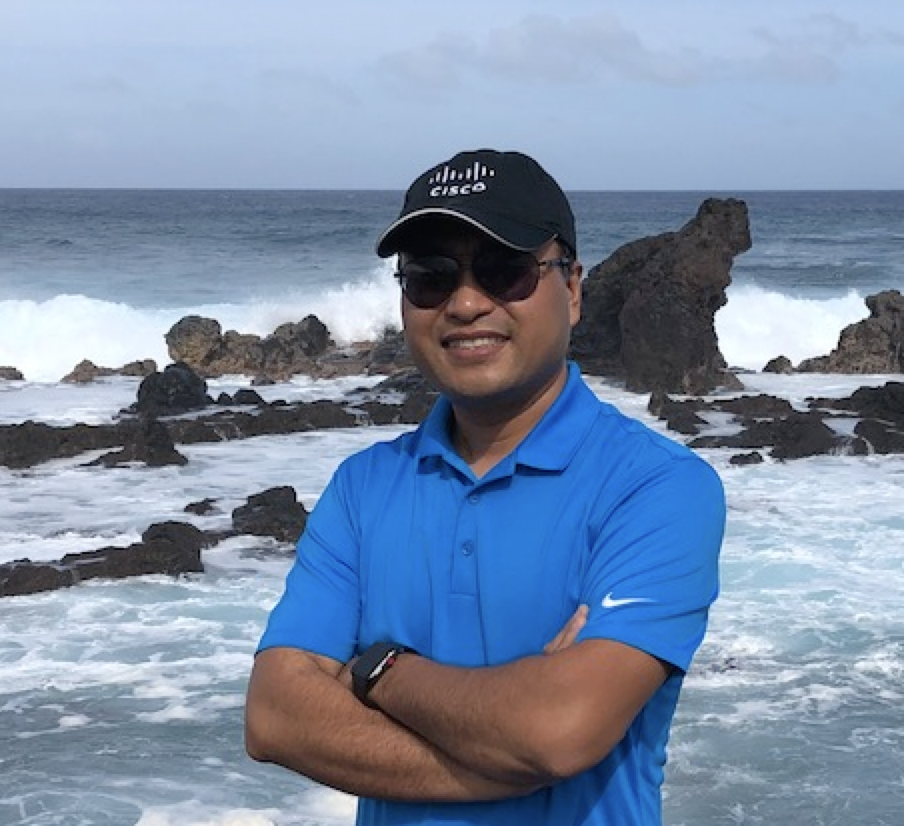
By helping his neighbors improve their quality of life, local grassroots organizer Tony Guan learned that change comes at a cost. In this Opportunity Now exclusive Q&A he highlights hard-fought campaigns: after successfully reducing airline noise, he continued to organize. His campaign to protect racial equality took him to the steps of the US Supreme Court.
Opportunity Now: A lot of people get into local politics to deal with facts on the ground. But you got pulled in by something happening in the sky that was impossible to ignore. How did that start?
Tony Guan: Back in 2016 we started a group working on the airplane noise issue for the local communities such as Sunnyvale and Cupertino. We advocated to stop the FAA from shifting all the flight routes over the Sunnyvale area.
ON: Was there a moment when you realized just how important this issue is?
TG: At one of the meetings, an elderly lady from Sunnyvale shared a very touching story about her husband who was on his deathbed. He felt responsible for the house they had bought, and he apologized to her, telling her, ‘Sorry, darling. When we bought this house, I never thought it would be like this, with noise right over our heads. I'm sorry. I cannot change that for you. I cannot do anything about it for you.’
That was the most heartbreaking thing to hear.
ON: It really affects quality of life.
TG: Looking back, I'm still amazed by how bold we were. We started off talking with members of congress, FAA people, and federal agents to try to stop the new flight routes. We had to learn a lot about airspace, regulation, how to monitor the noise, and how to monitor all the routes. That’s a lot of work and a lot of learning. We worked on all three airports around this area, SFO, SJC, and SQL (that’s a smaller one in San Carlos).
ON: How long did that go on for?
TG: It was a long time fighting. I think that fight kept on for two or three years.
ON: Did you ever want to give up?
TG: Like, every day. I was so tired, I was ready to give up. But there would always be some kind of moment, or conversation, to push me to keep going for one more day, one more rally, one more meeting.
ON: Did you succeed in reducing airplane noise for people in the Sunnyvale area?
TG: Luckily, we did succeed to some extent. We worked on all three airports and made some progress there, the route expansions from SQL, SJC, and SFO were paused.
ON: After working on something as pragmatic as reducing airline noise, how did you end up getting involved in Prop 16?
TG: For Asians, I felt the fear that all our fellow parents had about Prop 16, because it was actually going to revert our constitutional protection held up by Prop 209.
I served as a board member on The Silicon Valley Chinese Association which, together with other grassroots organizations, created the grassroots organization "Californians for Equal Rights PAC" as the official opposing org against Prop 16. It was such an action-packed period of time.
ON: Where did the hardest resistance to your campaign actually come from?
TG: As a matter of fact, a big part of the fight back in 2020 was within the Asian community. Some people were brainwashed by all the mainstream media, and they believed they would be the beneficiaries of affirmative action. We had to debate and give them the facts and tell them why affirmative action is not actually good for our community, and for society.
It’s a fact of life for Asian people: we go to the good schools not because we are Asian, but because we work hard. Is there one thing we get from getting treated with preference? No, nothing. We just have to work hard and to succeed. And that's it. It's not a complaint. Everybody should be doing that.
ON: What helped make your case credible to people in your own community?
TG: Mr. Ward Connerly is the father of Prop 209, he himself is Black and he does not believe in racial preferences. He fought really hard and sacrificed so much for that. I have very high respect for him. It was one of the best things to be able to work side by side with such a legendary figure and learn from him.
ON: And he wasn’t alone in the Prop 209 fight?
TG: He and Professor Gail Heriot and other pioneers fought really hard to protect our Constitution. Californians have enjoyed the prosperity Prop 209 has guaranteed for about two decades.
ON: Prosperity?
TG: We are a free market country. The government cannot assign racial preference to a certain group of people, the government cannot play the referee for who can succeed or who cannot. You don't put people into different categories and then decide who can or cannot succeed just because of their skin color, race, gender, ethnicity, or country of origin.
ON: After you helped defeat Prop 16, was the fight over, or did you keep having to defend Prop 209?
TG: Right after our Prop 16 victory, some Assembly members vowed to push for another bill, so we had another fight over ACA 7 which again would have dismantled Prop 209. This is the frustrating part about living in California. All those legislators can just keep trying again, even if they failed at first.
For ACA 7, they put some exceptions on the proposition, like ‘we treat everybody equally, except for the following conditions.’ That would have brought back racial preferences. So we started to organize again.
ON: What changed in how you organized after Prop 16?
TG: We went to the capitol building in Sacramento and visited the legislators to express our opposition. We organized quite well, together with Californians for Equal Rights Foundation, which was the big partner and leading force in the fight against ACA 7. We wore T-Shirts opposing ACA 7, and had a really great presence there. Eventually, the bill author decided to withdraw the measure because they knew that if it got on the ballot, they would have a very negative result. Without our effort as a grassroots group, that wasn’t going to happen.
Those bills go through the committees very easily and get on the ballot. But we made it clear that if they put it on the ballot, it's going to negatively impact their whole party, all their candidates, because the people of California already said ‘No’ and would ask ‘What the heck? In two years you put another similar proposition on the ballot again?’
We made that point clear, and they realized that, and they also admitted that it's not the time for them to talk about repealing Prop 209.
ON: It seems that it took several political fights for you to slowly gain credibility, and real political power.
TG: It’s more like trust. The most precious thing you can get from others is trust. They see what kind of person you are, and then they decide if they want to work with you or not on some issues. That’s the thing you cannot easily win.
ON: So how did you earn that trust?
TG: As a grassroots organizer, I started out with nothing. I’m just a nobody, still am. I just worked on one issue after another. After the airplane noise issue, I got a core group of 40 to 50 people. We’ve worked together for years and naturally trust each other because we saw how we all devoted our time, effort, and talent to all sorts of different things and at a lot of levels.
But you can’t just go out and tell people, ‘Trust me, bro.’ Nobody is buying that, even if you have a really good speech, and you can move people in the moment. After that, they need to work with you, see how you work and deliver results. That’s the hard part.
ON: What changed once people started taking your work seriously?
TG: People call me up, they know I’ve worked really hard on local issues such as school programs, school board elections, school district remapping, community safety, and other safety issues. They ask me to publish announcements for their causes, for rallies, distribution, donations, yard signs that we print as a grassroots group. Sometimes people reach out to me for advice on what steps to take to solve a community issue. That kind of trust is priceless, incredible.
ON: Didn’t your fight against Prop 16 get national attention?
TG: After we defeated Prop16 people from other states were encouraged a whole lot. If we could succeed in California, there's definitely a chance they could protect equal rights in the United States’s constitution, too.
We had a big rally outside the Supreme Court in Washington, DC, in October, 2022, when they did the hearing, to support Mr. Ed Blum and the Students for Fair Admissions lawsuit against Harvard, which was successful. Multiple people came to us to congratulate us on the Prop 16 victory. My friend Eva Guo, who sits on the board of Students for Fair Admissions, told us that they were really encouraged by our victory.
Mr. Ward Connerly also delivered a speech at that rally urging the judges not to buy into all the emotional arguments from particular interest groups. I believe we also filed the amicus brief in support of the Students for Fair Admissions.
ON: Doesn’t all this hard work as a grassroots organizer come at some personal cost?
TG: It means I’m less available for my family and my professional work. My wife sometimes worried why I was working on something in some other city that’s so remote to me. But I am very grateful for her understanding. Without her being so supportive, I cannot have spent so much time on so many issues.
I will say it's quite a rewarding feeling that my presence in this timeline matters a little bit. That gives a meaning of my time, my life.
ON: What’s the biggest weakness you see in your grassroots organizing thus far?
TG: I think we lack a network where like-minded people and organizations can share and can get to know each other, so that they can help each other when the need arises.
That said, we do have a very good relationship with the local Jewish community. They have some active organizers. When they organized rallies in Stanford against antisemitism, they asked us to show up and support them, and we went there. Then we had some rallies and asked them to support us, and they came and spoke. If we build a stronger network for all the local communities, I think it's going to be much easier for future grassroots activities.
ON: Isn’t there a lot of turnover among people who volunteer?
TG: You can’t count on one volunteer always being a volunteer. So we need to build continuously, involve more new people and tap into their talent, get them connected. Over time, it’s going to require a big effort to actually bring some real change to California.
We also need to discover more leaders in the community. These will be people who are motivated enough so that they would like to come up and lead for some issue. It cannot be just done by the same group of people.
For example, schools. When our kids grow up, we will be less engaged with all the issues in the school districts. But whatever happens to the school district could have a big impact on the community even if you don't have kids there. So we need people to be alert, vigilant on the issues when they're there. But we also need to look to the future. You cannot count on the same group for all the issues as they will for sure burn out very quickly. I would like to see more people coming out, so everyone can do a little bit to avoid somebody or some small group of people having to do a lot and sacrifice their life considerably.
Tony Guan has lived in the South Bay area of Northern California since 2011. Beginning in 2014, he gradually became involved in various political activities and community service efforts. The issues he has focused on include aircraft noise in the South Bay, drug stores issues in Mountain View, San Francisco, and Milpitas, local school district elections, and the fight against discontinuation of multicultural language programs in Fremont Union High School Districts. During the COVID-19 pandemic, he also initiated a local face mask donation project #StrongerTogether. in 2020, he was heavily involved in the fight against Prop 16 (ACA-5), and later against ACA-7. Currently, he serves with two grassroots organizations: the Silicon Valley Chinese Association (SVCA) and the Equal Rights for All Political Action Committee.
Follow Opportunity Now on Twitter @svopportunity
We prize letters from our thoughtful readers. Typed on a Smith Corona. Written in longhand on fine stationery. Scribbled on a napkin. Hey, even composed on email. Feel free to send your comments to us at opportunitynowsv@gmail.com or (snail mail) 1590 Calaveras Ave., SJ, CA 95126. Remember to be thoughtful and polite. We will post letters on an irregular basis on the main Opp Now site.