
☆ Should Bay Area taxpayers effectively pay BART’s union dues?
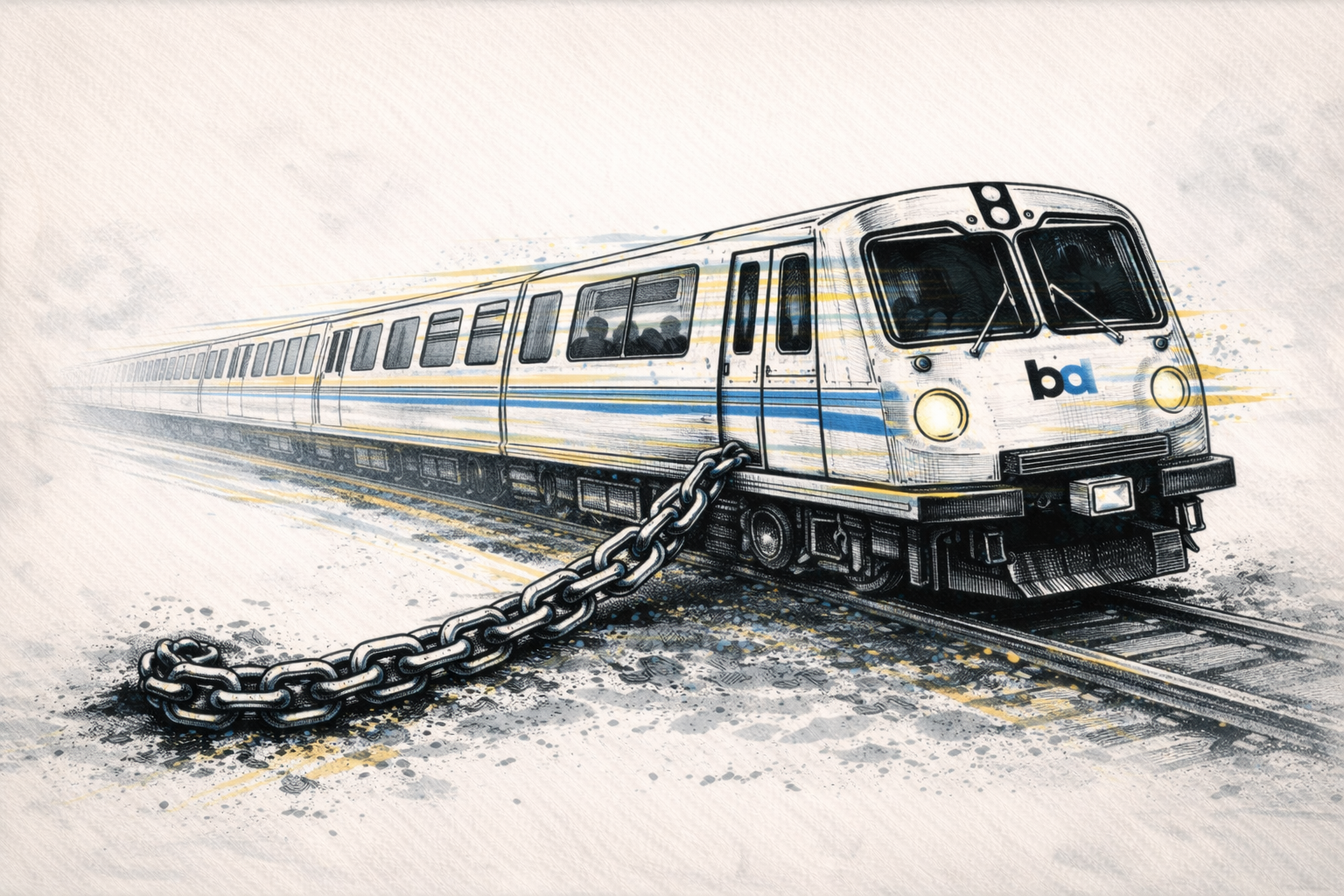
The Mercury News reports BART fares only cover 30% of costs, and suggests the only solution is a sales tax. But past transit executive Tom Rubin asks why BART is spending over a billion dollars to increase capacity, when ridership is down. He says BART could harness massive savings if they automate trains like they do in Vancouver. Why won’t the unions allow it? An Opportunity Now exclusive rebuttal to the Merc.
The Mercury News: BART has cited declining ridership due to the rise in remote work following the COVID-19 pandemic as fueling its financial crisis. Fares and parking fees collected pre-pandemic had covered about 70% of the funding for train operations, compared to now, according to data from BART, with fares covering just over 30% of operating costs.
Tom Rubin: I agree with the numbers. Pre-COVID, BART and Caltrain had two of the highest farebox recovery ratios in the United States, largely because they were carrying higher income individuals willing to pay a premium. But these people were the ones that remote work worked for the best. Also driving in the Bay Area has recovered and even exceeded its pre-COVID levels, but transit is still way behind.
Merc: The transit agency also reports spending has outpaced revenues while, at the same time, BART is running more trains than it was before the pandemic.
TR: BART is currently in the middle of a program to spend well over a billion dollars for a new automatic train control system to handle higher capacity. But their ridership is down.
Merc: The agency on Jan. 1 raised fares by 6.2%, or about an average of 30 cents from $4.88 to $5.18, to help cover these losses in funding, though that is not enough to save the agency from the major deficit it still suffers, transit officials say.
Opportunity Now: Revenue from taxes, revenue from fares. The Merc only talks about revenue. Aren’t there ways transit could look to stop spending so much money?
TR: The big expense is labor. Salary, wages, employee benefits and work rules. To the best of my knowledge, they’ve never even asked the question of unions about making less money or loosening work rules.
You can hire part-time operators for a lot less. Also, autonomous train control systems have been around for a long time. Vancouver has had autonomous train controls since 1986. But BART refuses to even consider spending a little bit of money to be able to take its current system to autonomous and cut the cost of hundreds of train operators.
The reason is the BART unions have a huge amount of power.
Follow Opportunity Now on Twitter @svopportunity
We prize letters from our thoughtful readers. Typed on a Smith Corona. Written in longhand on fine stationery. Scribbled on a napkin. Hey, even composed on email. Feel free to send your comments to us at opportunitynowsv@gmail.com or (snail mail) 1590 Calaveras Ave., SJ, CA 95126. Remember to be thoughtful and polite. We will post letters on an irregular basis on the main Opp Now site.