GrowSF analyzes the Golden City's elevated property crimes post-Prop 47, and explains that reclassifying felonies as misdemeanors has put the onus on eyewitnesses to pursue laborious “citizen's arrests,” since police now can't directly arrest folks who steal under $950. As SJ's mayor Mahan remarks, does it make sense to slap offenders on the wrist for “repeatedly harm[ing] our community”?
Read MoreDan Lesovodski, Head of AI Incubator in Sunnyvale, assesses Mayor Mahan and CM Cohen's 10.10 proposal for incentivizing artificial intelligence innovation in San Jose. Lesovodski attests that attracting AI companies involves developing incubators with orgs like Plug and Play (which has a thriving tech center already in Sunnyvale and, potentially next year, SJ), partnering with local universities to recruit top talent, and providing meaningful tax/rent breaks. An Opp Now exclusive.
Read MorePointHealthTech's Josie Rasberry argues that a healthcare system directed by the free market would encourage patients to “shop around” for the most high quality, cost-effective care. This, in turn, would prompt local providers to be more upfront—and reasonable—about prices. Hear that, proponents of gov't-ruled healthcare like SJ Assemblymember Kalra?
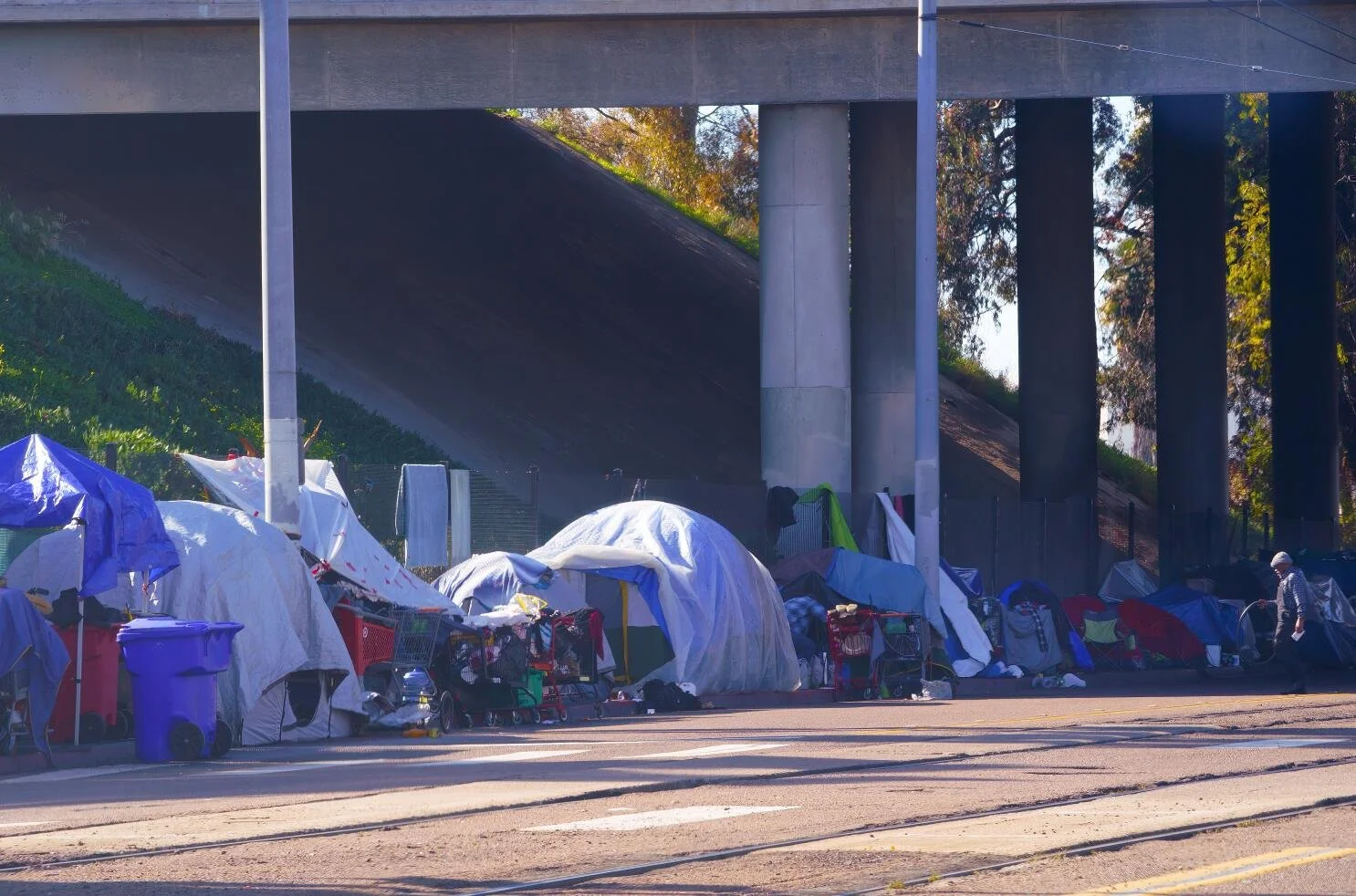
Read MoreIn tandem with cities like San Jose, Sacramento, and San Diego, the Bay Area's Gilroy passed a partial camping ban this summer designed to keep areas near schools and parks safer. As the Santa Cruz Sentinel reports, the City of Gilroy recently ordered a sweep of illegal homeless encampments at Uvas Creek Park—one of its first clear-outs under the ordinance.
Read MoreIn the San Diego Tribune, past police chief Shelley Zimmerman critiques Prop 47, which Californians approved in 2014 to reclassify property thefts under $950 in value from felonies to misdemeanors. Since then, cities like SJ have observed higher property crime rates, leaving many like Zimmerman (and SJ's mayor Mahan) to question Prop 47's premise: that downgrading consequences of lawbreaking will make people do less of it.
Read MoreAccording to recently-fired De Anza College DEI head Tabia Lee, we shouldn't be surprised at rising antisemitism on college campuses. During Lee's DEI stint—before she was sacked for not being Woke enough—program leaders constantly pushed anti-Jewish sentiments (comparing them to “oppressor” whites) and shut down her attempts at inclusion. Many are questioning if DEI is less a foundational reality than the Left's "litmus test."
Read MoreConcerned about backsliding revenue, San Francisco's mayor London Breed insists city departments cut $206 million in total ASAP. Breed adduces SF's looming $500 million deficit projected for 2025–2026, thanks in part to post-Covid metropolitan “doom loops.” Meanwhile, the city's depts scramble to consolidate resources and preserve core services. From the Daily Mail.
Read MoreLocal media remarks that SB 274, which deep-sixes the ability for schools to suspend students for “willful defiance,” is being questioned by some SJ teachers who prioritize safe learning environments. Lance Christensen, Education Policy VP at California Policy Center, discusses why defiant behavior is a valuable indicator of family life and future safety risk—and why teachers, admin, and students suffer when class discipline is curtailed. An Opp Now exclusive.
Read MoreRabbi Dov Greenberg, Chabad at Stanford University executive director, comments on a now-removed professor's disturbing activity of singling out Jewish students for what the university acknowledges as “identity-based targeting.” An Opp Now exclusive.
Read MoreThe Globe's Evan Symon analyzes a key factor in SF's mounting homelessness crisis: Many homeless folks are being offered shelter but refuse the assistance—54%, according to recent research. Consequently, it's imperative that cities have the legal rights to 1) prohibit dangerous street encampments and 2) provide treatment for severely mentally ill individuals who are resistant.
Read MoreReform California's Carl DeMaio breaks down a list of tax hikes to expect if November's voters approve two controversial anti-Prop 13 bills: new mileage, healthcare, exit, savings, gas, utility, and local increases. Despite Bay Area voters' resounding support for Prop 13, State legislators—and SJ's City Council—are endorsing ACA 1 & 13's attempts to “gut” its safeguards by lowering the 66% voting threshold.
Read MoreSJ City Council has a bizarre habit of taking positions on statewide issues that run wildly contrary to what local citizens really want. In 2020, the Council voted unanimously to support expanding affirmative action in education with Prop 16—and local voters rejected 16 by a wide margin. In 1978, the Council voted to oppose Prop 13—and Prop 13 passed locally by a 2–1 margin. This year, history repeated itself as the Council voted to undermine Prop 13 by supporting ACA 1 and 10, and opposing the TPA initiative—even as polls show Prop 13 remains wildly popular. Tobin Gilman surveys the unrepresentative disconnects on Medium.
Read More