Opinion: Punitive removal laws won’t fix legislator–resident tensions
Analyzing SB 1100 (which lets legislative bodies remove members of the public from meetings if deemed “disruptive”), Joe Mathews suggests it will only flame local politician–community member conflicts. Rather than avoiding communications with residents, who may feel frustrated already, lawmakers should consistently adopt more open relations.
Read More
☆ Opinion: Nonstop campaigning norms could destroy the SJCC
Pat Waite, president of SJ-based Citizens for Fiscal Responsibility (CFR), launches an Opp Now exclusive series on 2023 Local Gov't Hopes & Fears. Waite’s biggest wish and apprehension for this year’s City Council (respectively: budgetary oversight and combative “permanent campaigning”) below.
Read More
Can SF shoulder the latest office occupancy plunge?
Conventionally tech-reliant Bay Area cities like San Francisco should consider drastic budgetary cuts going forward, says CATO Institute’s Marc Joffe. With office vacancies soaring—most recently by tech layoffs and remote work trends—SF no longer can rely on early Internet development for the city’s fiscal stability.
Read More
Contra Torres, equity is the wrong criteria for tree-planting, experts say
Nobody serious doubts the importance of healthy urban forests, but the process for deciding where and what to plant is much more complex than knee-jerk social justice soundbites. SJ CM Omar Torres supports demanding an "equity lens" to tree planting across districts, while expert Ethan Bodnaruk, environmental and geotechnical engineer at Atlantic Testing Laboratories, suggests a much more scientific and health-based model in Deeproot.com.
Read More
Expert: Local tech layoffs threaten BART’s ridership
Wolf Street’s Wolf Richter analyzes Bay Area Rapid Transit’s (BART) recent reversion in rider numbers—post-Covid progress eroding slowly but surely—which Richter attributes to prolific tech industry layoffs. BART’s expenses being mostly fixed, it’s unclear how the continually-expanded system can support itself moving forward.
Read More
Reminder for CA’n lawmakers: School choice is as anti-racist as you get
Writing for the Washington Examiner, Black Minds Matter founder Denisha Merriweather critiques claims that affording families more robust options re: their kids’ schooling is—yup, you guessed it—racist. Countering these ideas, Merriweather unpacks why initiatives that champion parents and communities are “anything but racist.”
Read More
☆ Veteran lawmakers offer perspective, context—and their candidacies—to open SJ CM seats
Rose Herrera (District 8) and Forest Williams (then-District 2) have both served as SJ councilmembers, so they bring experienced points of view to how SJ politics have changed, and the challenges the new council faces. Both have applied for the interim seats the council will appoint. They chatted with us in this Opp Now exclusive.
Read More
Perspective: CA’s proposed reparation payouts too risky
Newsom wants to award state-funded “sorry money” to Black descendants of enslaved people. In the California Globe, Evan Symon breaks down the folly of slavery reparations: They’re objected to by most CA’ns, legally challenging to establish, and partially disregard past suffering of other minoritized races/ethnicities.
Read More
San Jose Unified admins’ salaries are higher than Newsom’s
Breaking down the West Contra Costa School District’s controversial bond measure of 2020, the California Globe’s Edward Ring highlights how CA’n school admins are egregiously overpaid. If the $281k and $235k salaries SJUSD’s Albarran/Mahon currently earn were delegated to the classroom, what a difference that could make. Even our state governor sits at $224k/yr. — are superintendents more important?
Read More
Perspective: CA’s diminishing tech industry to blame for deficit
Unsurprising to most, Gov. Newsom just announced California’s deficit of $23 billion, in stark contrast to Texas (currently juggling an extra $33 billion). Marketplace’s Matt Levin breaks down how CA tech companies — which continue to flee the state in record numbers — are integral to the stock market and wealthy residents’ incomes.
Read More
☆ SJ church case can’t inform future rulings: Experts react
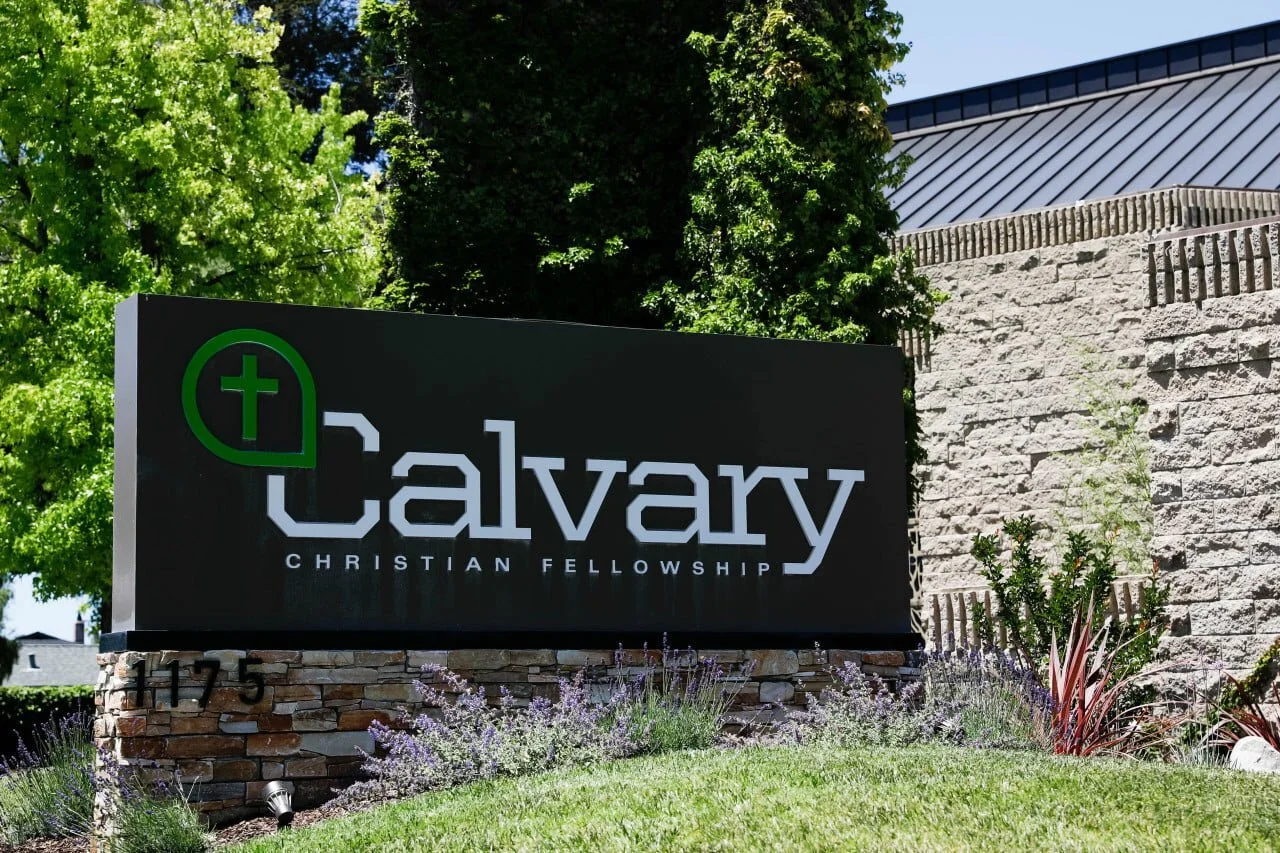
The latest chapter in a controversial legal battle has seen Calvary Chapel’s (Covid-era) contempt-of-court charges dropped. Yet, the case will be depublished, so it can’t be used as legal precedent. Law experts offer insight into this complex local bind in an Opp Now exclusive.
Read More
Can CA sustain itself on green energy in our lifetime?
New Zealand’s former Minister of Energy Barry Brill debunks Newsom’s idea that CA’s transition to renewable energy sources will be quick—and is possible before 2070. Assuming the Golden State can make a “green” switch soon, even the International Energy Agency (IEA) says it’s unlikely for global hydrocarbon dependency to stray below 84%. This analysis first appeared in Watts Up With That?
Read More