
Why the feds were right to pull the plug on HSR
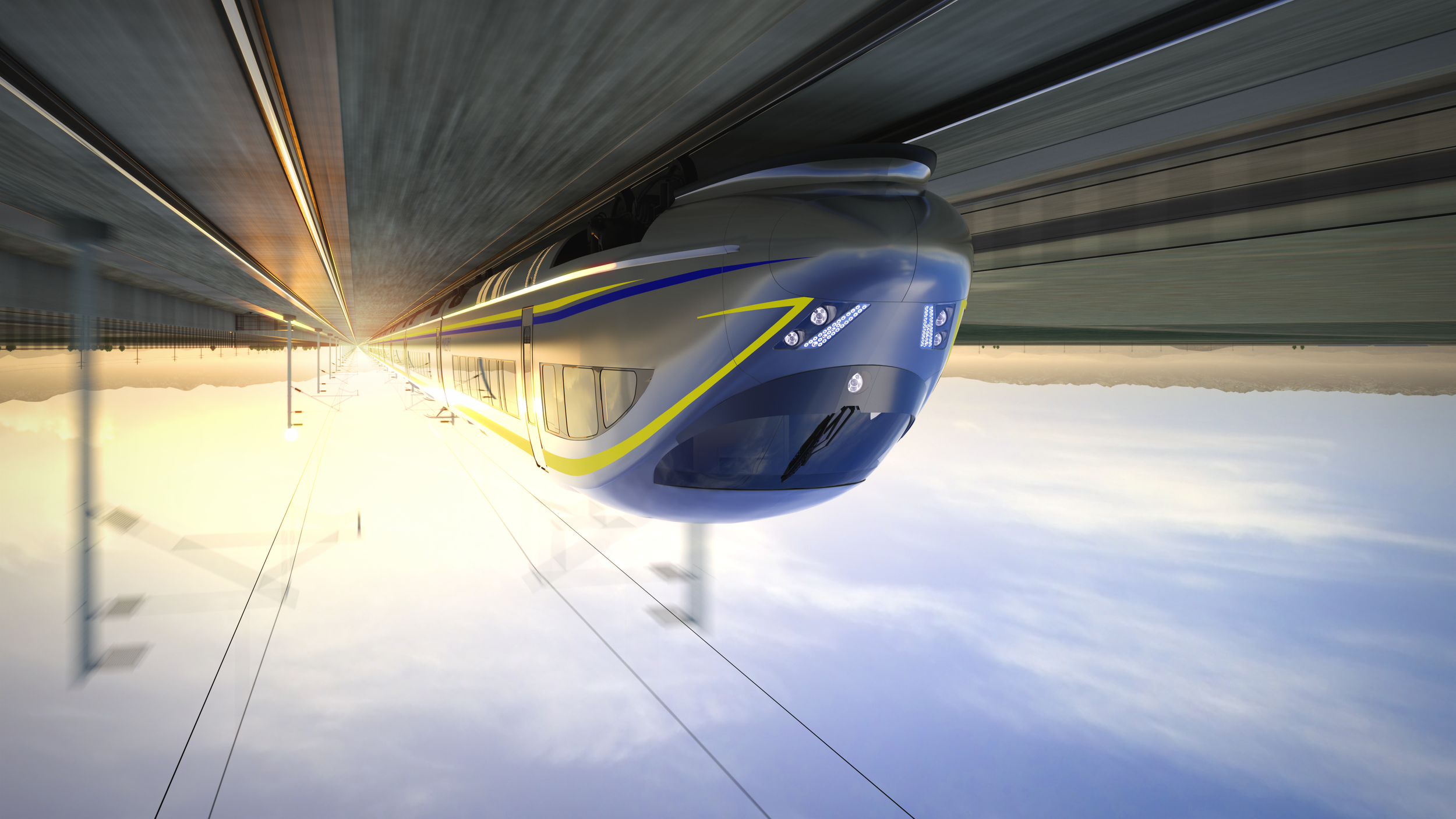
And why SJ City Council's stubborn refusal to withdraw support for the preposterous boondoggle is deeply, deeply misguided. Nat'l Review opines.
The imagined bullet train was always a misfire. The idea of high-speed rail has a nearly erotic appeal to progressives, who love communal trains over individualized autos and think cars are destroying the planet whereas trains can save it. High-speed rail is to transit what windmills are to energy — an environmentally correct, futuristic technology that will always under-deliver.
California voters passed Proposition 1A in 2008, getting the ball — if not any actual trains — rolling. The project was supposed to cost $33 billion.
What could go wrong? Well, everything. Bad decisions about where to build the tracks, complacent contractors, environmental and union rules — you name it.
The initial, scaled-back line is now supposed to be completed by 2033, and even that is optimistic. Elon Musk might put a man on Mars before Governor Gavin Newsom or one of his successors manages to get even a much less ambitious high-speed rail system underway.
The current focus is a line between Merced (pop. 93,000) and Bakersfield (413,000). No offense to the good people of either of these places, but these aren’t major metropolises. In Northeast terms, this is less a rail connection between New York City and Washington, D.C., and more a connection between Newark, N.J., and Bridgeport, Conn.
Passenger estimates for the California system have always been absurd. The fantasy is that ridership will be double what it is now in Amtrak’s Northeast corridor. But as Marc Joffe of the California Policy Center points out, population density is much greater near Northeast stations, it’s easier to get around cities in the Northeast on the way to or from the train, and a rail culture is much more embedded in the Northeast than in car-centric California.
As for reducing greenhouse emissions, the long-running project is itself a significant source of emissions, and the benefit of fewer drivers in cars will be vitiated by the fact that more and more Californians will be driving electric vehicles.
The original estimated $33 billion cost is now $35 billion for just the scaled-back line and more than $100 billion and counting for the whole shebang. There was no reason for the feds to pour good money after bad supporting a preposterous project that doesn’t have any national significance.
Read the whole thing here.
Follow Opportunity Now on Twitter @svopportunity
We prize letters from our thoughtful readers. Typed on a Smith Corona. Written in longhand on fine stationery. Scribbled on a napkin. Hey, even composed on email. Feel free to send your comments to us at opportunitynowsv@gmail.com or (snail mail) 1590 Calaveras Ave., SJ, CA 95126. Remember to be thoughtful and polite. We will post letters on an irregular basis on the main Opp Now site.