☆ The long, sad history of misguided transit taxation in Santa Clara County
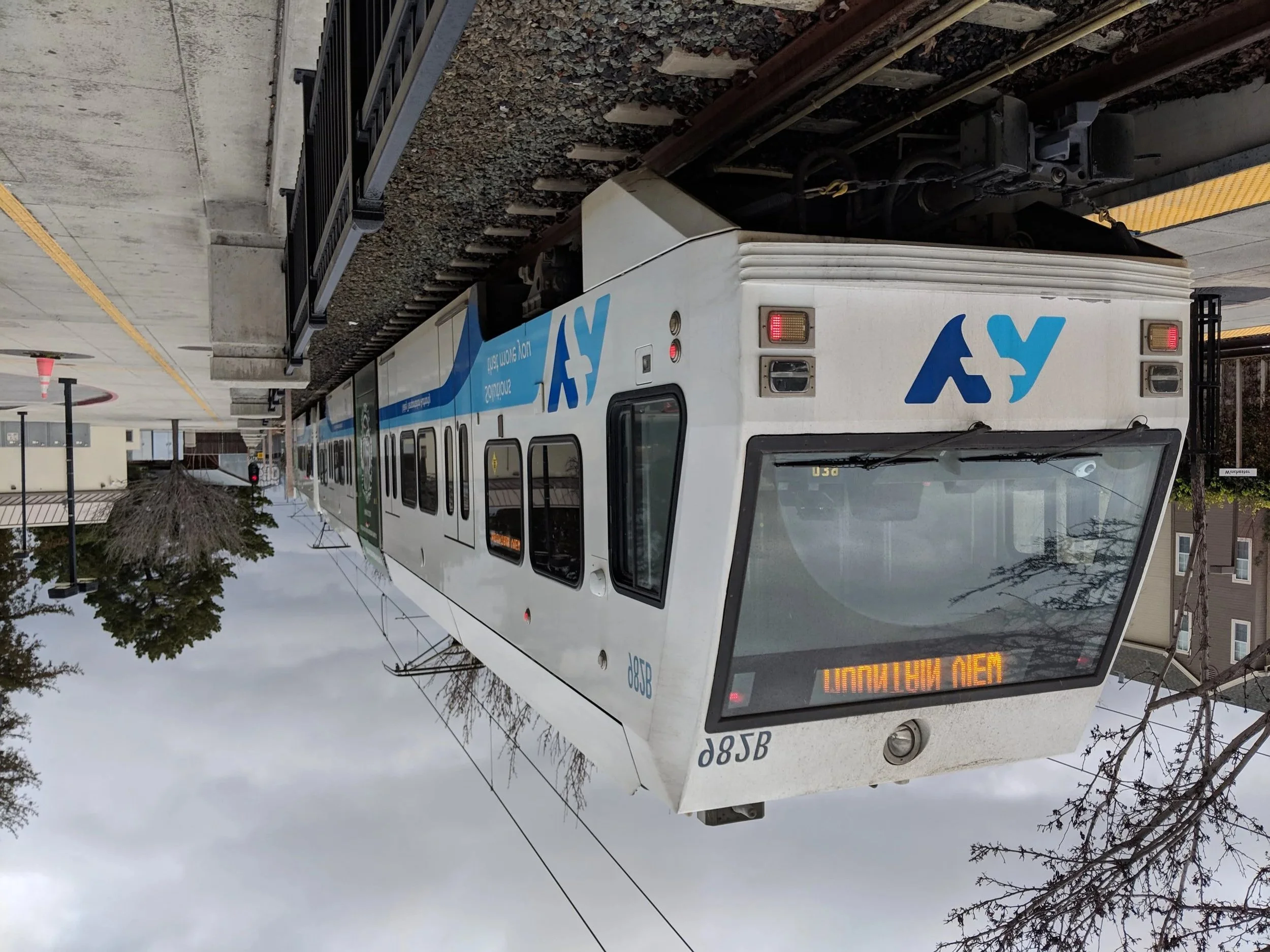

Year after year, decade after decade, local gov't has asked county residents to shell out more and more for a mass transit fiscal sinkhole that has delivered less and less. Public policy prof and former SJ CM Pete Constant walks us through the sorry tale. An Opp Now exclusive.
I moved to California in 1977, a freshman in high school with no idea that the year I arrived was also the year state lawmakers imposed the Bay Area's first dedicated transit sales tax — a half-cent increase across San Francisco, Alameda, and Contra Costa counties to prop up BART, AC Transit, and Muni. I'll turn 63 this year. Getting ready for retirement and thinking about when I need to file the paperwork for Medicare and Social Security. And this November, Bay Area voters are being asked to approve a sales tax increase to save BART and Muni from "catastrophic" cuts — the same three agencies, the same rationale, virtually the same pitch I first heard about as a teenager. My entire adult life has run alongside this one, unbroken argument, and it has never once been resolved by the answer we keep giving it.
That's the frame I want to offer as a former San Jose councilmember, a professor of public policy, and someone who has now watched this play out for fifty years – a half a century!
This is not a new problem asking for a new solution. It's the oldest ask in the book, on its recurring visit.
Identifying the problem: this has happened before. Repeatedly.
"Connect Bay Area" would add a half-cent to the sales tax in Alameda, Contra Costa, San Mateo, and Santa Clara counties, and a full cent in San Francisco, for the next 14 years, to fund BART, Muni, Caltrain, SamTrans, VTA, and AC Transit operations. Supporters describe it as urgent and unprecedented. It is neither. Let me walk through what I mean, county by county, because the pattern is the real story here.
Santa Clara County has gone back to voters for transportation sales taxes five separate times since 1976: an original half-cent that never sunsets, another in 1996, another in 2000, an eighth-cent BART-only measure in 2008, and a fifth in 2016. All five are still stacked on top of one another and still collecting today — together generating roughly $880 million a year for VTA, by the agency's own recent numbers.
Alameda County has done this three times since 1986, most recently in 2014, layered on top of the 1977 tax I mentioned above, which is still in effect.
San Francisco has done it three times since 1989.
Contra Costa County has done it twice since 1988 — Measure C, then Measure J in 2004, both still collecting through 2034 — and tried for a third half-cent in March 2020, which voters turned down.
That's worth pausing on: the man leading this year's opposition campaign, Marc Joffe, runs the Contra Costa Taxpayers Association, in the one county among these four that has already told transit agencies no once. Toss in two rounds of regional bridge toll hikes, a third now phasing in, and the 2017 state gas tax increase, and you start to see why I find it hard to take "unprecedented" seriously.
Add it up, even conservatively, and voters in these four counties alone have approved something on the order of $33 to $45 billion in transportation sales taxes since the late 1970s. That's before counting bridge tolls or the gas tax separately — and both of those turn out to be substantial in their own right. Bay Area drivers have paid roughly $16 billion in tolls on the seven state-owned bridges since Regional Measure 1 took effect in 1989, a figure the Bay Area Toll Authority tracks in one continuous, audited dataset; tolls are scheduled to keep climbing toward $11.50 by 2030. Gas tax revenue, by contrast, is currently around $294 million a year combined for these four counties' cities, funding roads rather than transit operations.
I raise all three numbers together to make one point: this sales tax ask isn't filling some total absence of transportation funding. It's stacking on top of at least three funding mechanisms that already exist and that we're already paying into, several times over.
Examining the implications: where did fifty years of taxing get us?
Here's the number that ought to trouble every voter more than any "fiscal cliff" warning. Before the pandemic, BART's farebox recovery ratio — the share of its operating costs actually paid for by riders, as opposed to taxpayers — was 66.7 percent in fiscal year 2019, among the best of any rail system in the country. That's real proof the model can work in the Bay Area. Today it's down to 25 percent. Muni and AC Transit are both down around 8 percent. And VTA — the agency with five tax measures behind it — didn't just stay weak, it got weaker: about 9 percent before the pandemic, and roughly 6 percent now.
That tells me this was never purely a funding problem, and a fourteenth or fifteenth – or even a twentieth sometime in the future - sales tax measure won't make it one. BART didn't lose two-thirds of its farebox recovery because the region under-taxed itself. It lost it because commute patterns changed and costs didn't follow. A new sales tax doesn't reverse that trend; it just quietly shifts more of the bill from the shrinking number of people who ride these systems to the much larger number of us who simply buy things in these five counties.
I'd also point, briefly, to VTA's BART extension to San Jose and Santa Clara as an illustration of how these same institutions handle the money they already have. In 2014, VTA estimated the project at $4.7 billion, opening in 2026. Today's estimate is $12.75 billion, opening in spring 2037 — nearly triple the cost and a decade behind schedule, on VTA's own figures. A Santa Clara County civil grand jury that reviewed the project found that federal transit reviewers considered VTA's cost and schedule assumptions overly optimistic. That's not my characterization — that's a court-empaneled grand jury describing federal reviewers' own findings. It's also worth noting, in passing, that when the overwhelming share of every operating dollar at these agencies goes to labor rather than fares — including, by BART's own disclosure, roughly a dozen employees earning more than $500,000 a year — voters deserve a clear answer about what exactly their next dollar is buying.
Evaluating the alternatives, and my recommendation
If this measure came bundled with real structural reform — a different funding model, consolidation of overlapping agencies, meaningful change to how labor costs are negotiated — I'd reluctantly tell you to consider it on those merits. It isn't. The oversight mechanism built into the enabling legislation is an independent financial review. That's useful information for policymakers. It is not a fix. An audit tells you the size of the hole. Mere oversight doesn't stop anyone from digging it. What we need is accountability.
California already carries the highest base sales tax rate of any state, and several Bay Area cities — Oakland, Alameda, Hayward, San Leandro, Union City — already sit at 10.75 percent combined, among the steepest rates in the country, in one of the most expensive regions in the country to live. The responsible alternative isn't automatically "no new funding, ever." It's asking these agencies to show us the structural reform first, and earn the next round of trust, rather than simply asking us to write the check one more time and hope the 51st year is different from the first.
I was 14 years old when this argument started. I'll be nearly 80 by the time this measure's 14-year term runs out. I'd like the region to solve this before I hand the same unfinished argument to my great grandchildren.
Pete Constant is a retired San Jose police officer, former San Jose City Council member, current Professor and Chair of the Public Policy Department at William Jessup University, and Vice President of the Silicon Valley Taxpayers Association.
Follow Opportunity Now on Twitter @svopportunity
We prize letters from our thoughtful readers. Typed on a Smith Corona. Written in longhand on fine stationery. Scribbled on a napkin. Hey, even composed on email. Feel free to send your comments to us at opportunitynowsv@gmail.com or (snail mail) 1590 Calaveras Ave., SJ, CA 95126. Remember to be thoughtful and polite. We will post letters on an irregular basis on the main Opp Now site.