
Hayek: So-called emergencies are the pretexts by which The State takes away fundamental liberties.
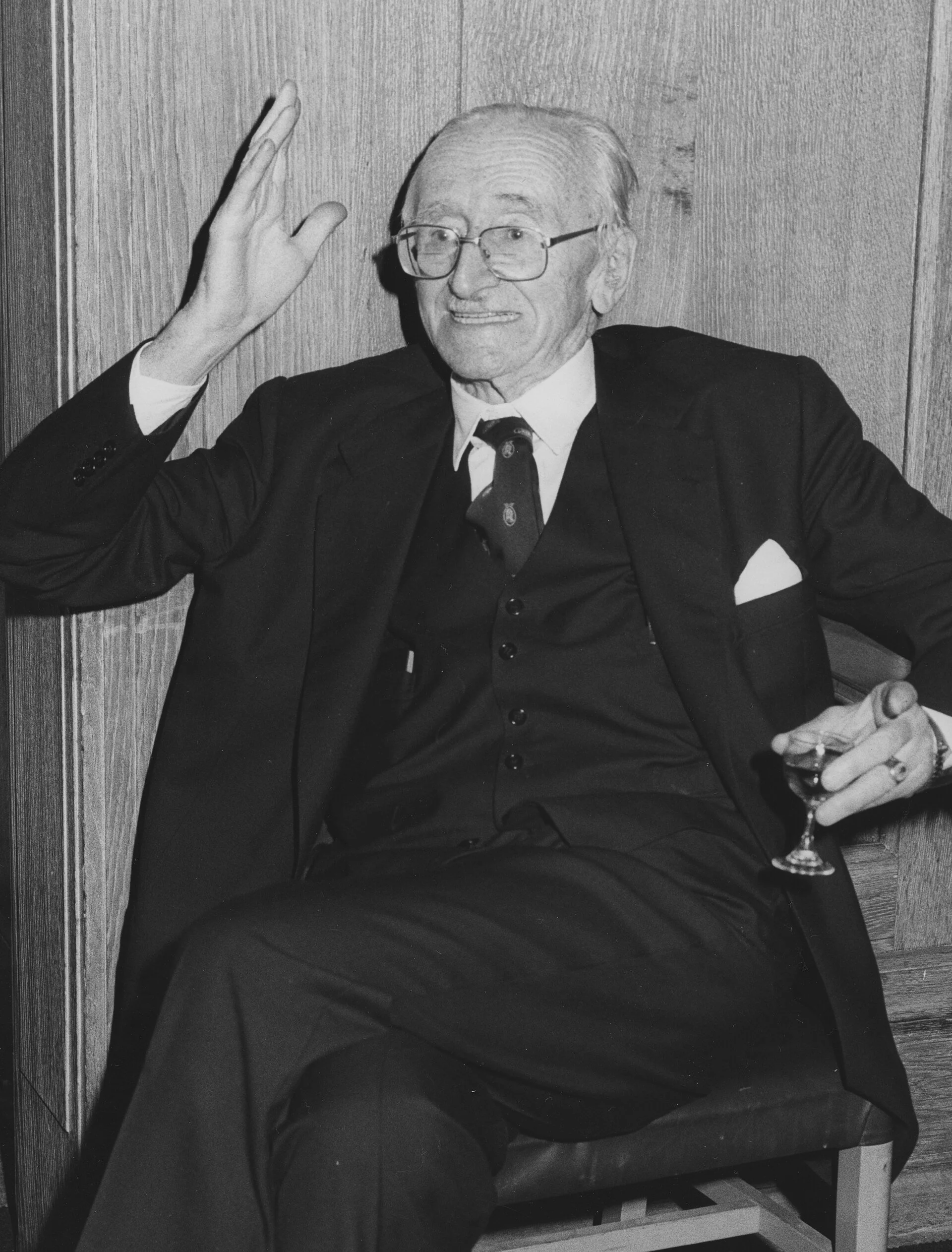

With California gubernatorial candidates waving the Emergency Flag to justify even more overweening state control (lookin' at you Xavier), it's good to remember that Friedrich Hayak, Opp Now's Guiding Light, saw through the gamesmanship nearly a century ago. From the Orange County Register.
Today marks the birth date of the influential free market economist, political philosopher and Nobel laureate. It’s as good a time as any to reflect on the wisdom of Hayek.
In 1944, his most popular book, “The Road to Serfdom,” was published. In it, Hayek cautioned against the growing intellectual and political notions that disregarded liberty in favor of central planning of economic affairs. One of the core insights Hayek offered is that the more “the state ‘plans,’ the more difficult planning becomes for the individual.”
Over the course of many decades, Hayek developed, explained and defended his position that it is a “fatal conceit” to believe that “man is able to shape the world around him according to his wishes.” Rather, he argued, the “extended order” of human cooperation “resulted not from human design or intention but spontaneously.”
As Hayek understood, knowledge is dispersed in a world too complicated for any central planner to ever wrap their heads around. Through the price system, the needs and wants of people all over the world can be met more optimally by entrepreneurs and individuals who possess the specific knowledge required to fulfill them. Try as they might, no central planning government bureaucracy could coordinate such a dynamic system.
He did not doubt the intentions of collectivists who seek to use the force of government to remake society, but worried about the long-term threat of collectivism and reliance on state power not only on the economy but on society as a whole.
Though he supported the providing of some social safety net programs, he opposed the redistribution of wealth and policies rooted in “social justice,” the latter of which he described as a “mirage” and “a quasi-religious belief with no content whatsoever.”
Though Hayek passed away in 1992, his ideas are as relevant as ever.
If governments operated with Hayekian principles in mind, there would be more robust commitments to checks-and-balances to ensure government doesn’t overreach. Governments (and voters) would also recognize that their endless interventions in the market system stifle the potential for innovative solutions to emerge. And fundamentally, that top-down government solutions have a tendency to stifle bottom-up solutions that can emerge from the voluntary cooperation of free people.
In a time when governments at all levels are busy concocting new interventions, new market manipulations, new taxes and new roles for government bureaucrats in society, we hope that more Americans recognize, as Hayek did, that continuing down that path is the road to serfdom, not prosperity.
Read the whole thing here.
Follow Opportunity Now on Twitter @svopportunity
We prize letters from our thoughtful readers. Typed on a Smith Corona. Written in longhand on fine stationery. Scribbled on a napkin. Hey, even composed on email. Feel free to send your comments to us at opportunitynowsv@gmail.com or (snail mail) 1590 Calaveras Ave., SJ, CA 95126. Remember to be thoughtful and polite. We will post letters on an irregular basis on the main Opp Now site.