
Calls to bail out local transit agencies don't make economic sense
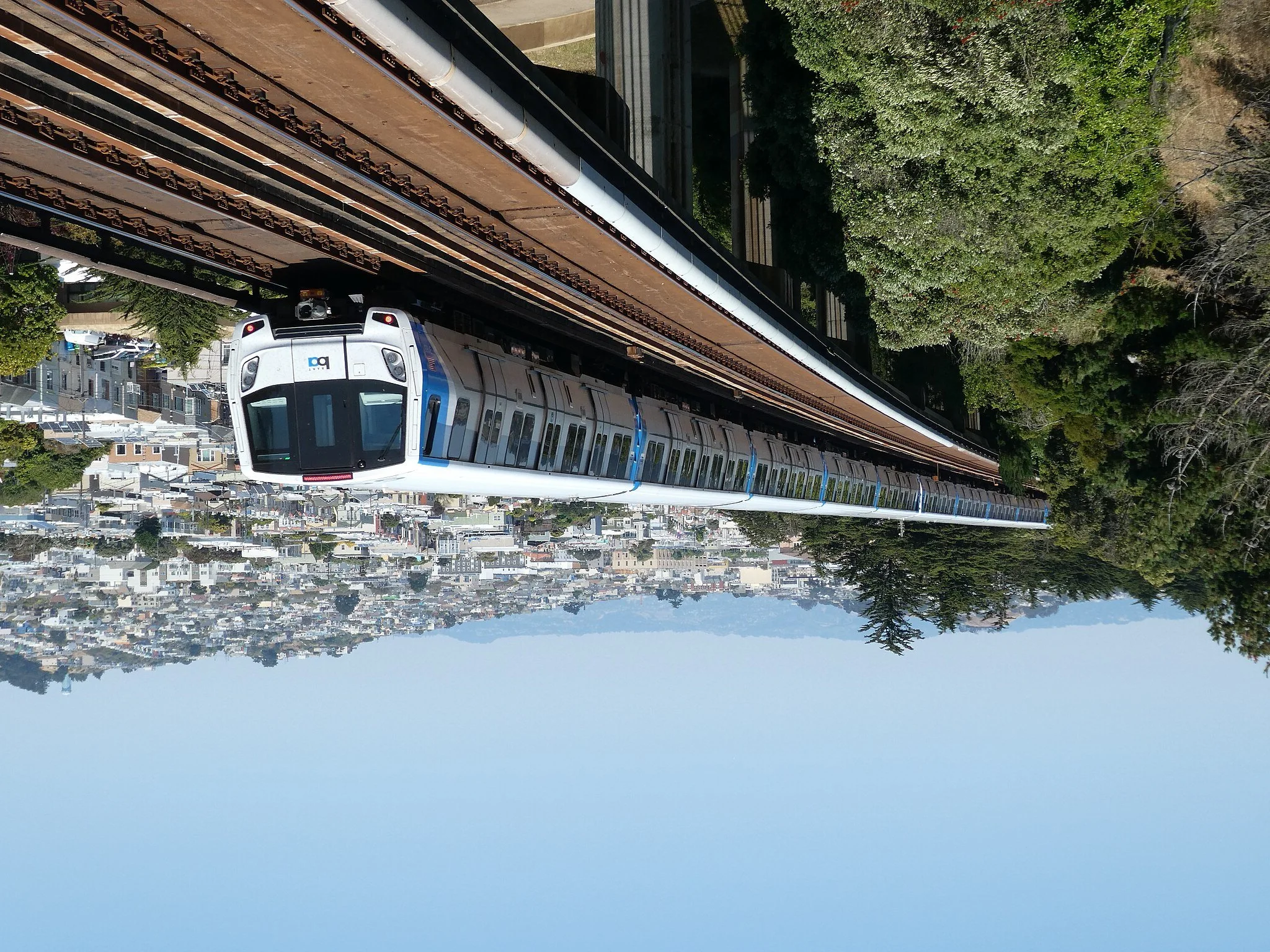
,_July_2023.JPG)
Here's the standard narrative: the state’s transit systems are still struggling because of the COVID-19 lockdowns. Therefore, Bay Area Rapid Transit (BART), Muni and other public systems need a state bailout and higher sales taxes to avoid severe service cutbacks – and carry them over until ridership levels return to pre-pandemic levels. Pacific Research Institute explains how the narrative is bogus--that Bay Area transit is systemically flawed, and more cash won't solve its problems.
Over the past three years lawmakers have focused almost entirely on finding additional revenues for Bay Area transit agencies rather than considering reforms to how those systems operate. The agencies have, for their part, routinely threatened debilitating service cutbacks if they don’t get the extra cash. They’ve generally gotten what they wanted, but it never is enough. It’s a dispiriting cycle.
A little recent history is instructive. The Legislature and Gov. Gavin Newsom in 2023 approved a $5.1-billion statewide transit bailout, with $747 million going to the Bay Area’s 27 transit agencies. In early 2024, lawmakers toyed with the idea of creating a new, massive mega-transit agency to oversee those multiple local agencies, but fortunately even California’s legislators realized that rearranging those bureaucratic deck chairs would not result in cost savings.
Later that year, San Francisco’s Muni (the city’s buses, cable cars, light rail and streetcars) boasted about its astounding ridership comeback – at 92% of pre-pandemic levels on weekends – yet nevertheless warned about inflation-driven shortfalls. The agency even threatened to shutter popular routes and the tourist-beloved cable cars. The goal seemed to be punishing residents and visitors for budget shortfalls.
After San Francisco voters failed to pass a new tax on ride-sharing companies to fund transit in November 2024, legislators concocted a plan to boost sales taxes to fund transit. At the end of session last year, Newsom signed legislation granting state permission for Bay Area counties to place a tax measure on the 2026 ballot. Newsom had also promised a $750-million loan, but the Legislature couldn’t agree on a deal before the session ended. So the governor said he’d come up with a loan proposal before January.
Politico reported last week on some of its newly emerging details: A memo from the California Department of Finance “outlines a proposal under which the state would advance funding for projects with longer completion timelines and authorize the Metropolitan Transportation Commission, the coordinating agency for Bay Area rail and bus services, to issue short-term loans using that cash.” In other words, the agencies will help keep their short-term operations afloat with money designed to fund long-term investments. This is hardly sustainable, but it does kick the can down the tracks.
A recent study co-authored by Marc Joffe, a transportation expert found that transit systems recover only around 10% of their costs from the fare box, which suggests that even much-higher ridership won’t fill their budget holes. The bulk of the agencies’ problems relate to their inability to control spending. The study points to “a significant gap between revenue and expenses that necessitates over $10 billion in annual taxpayer subsidies” and pins the problem on “what economist William Baumol termed ‘Cost Disease.’ … [W]ithout significant policy changes, such as embracing automation and more cost-effective transit models, these subsidies will continue to grow.”
COVID-19 policies certainly caused ridership problems, but transit agencies have faced long-term ridership declines and revenue struggles since long before anyone heard of the coronavirus. As I explained for the Free Cities Center, “BART’s salaries are eye-popping, which might explain one reason the agency can’t make ends meet.” Furthermore, the public has not been flocking to transit despite massive investments. “BART had some of the nation’s lowest usage rates for major metropolitan areas before … COVID-19. Transit systems across the country had lost around 20% of their riders between 2014 and 2018,” I added.
Instead of addressing the complex root causes of their struggles, transit agencies – and California’s Bay Area ones in particular – have doubled down on their push for more revenue even as past revenue infusions inevitably prove inadequate. Transit is an important service in densely populated urban areas such as San Francisco and Oakland. But the current model isn’t working whether we judge the systems by their finances, ridership numbers or any other real-world metric (even if agencies occasionally make headway on problems such as crime.)
Read the whole thing here.
Follow Opportunity Now on Twitter @svopportunity
We prize letters from our thoughtful readers. Typed on a Smith Corona. Written in longhand on fine stationery. Scribbled on a napkin. Hey, even composed on email. Feel free to send your comments to us at opportunitynowsv@gmail.com or (snail mail) 1590 Calaveras Ave., SJ, CA 95126. Remember to be thoughtful and polite. We will post letters on an irregular basis on the main Opp Now site.